Home › Commercial Retaining Walls
We build commercial masonry retaining walls in Baltimore, MD to support grades around lots, buildings, and access roads. Our team installs engineered CMU and block systems with proper drainage and reinforcement. From small site walls to large retaining structures, we focus on stability and clean appearance.
Superior Masonry Baltimore provides professional commercial masonry retaining walls throughout Baltimore, MD, Maryland and the surrounding area. Our licensed, insured crew delivers safe, clean, on-time work with a free estimate before anything begins. Call (410) 849-6723 or request your free quote.
Commercial Retaining Walls for Baltimore Properties
Superior Masonry Baltimore designs and builds commercial masonry retaining walls that solve real site problems while still looking professional on your property. Whether you manage a shopping center near Towson, an industrial site along the harbor, or a multifamily complex in the city, your retaining wall has to handle heavy loads, constant foot traffic, and Baltimore’s freeze-thaw cycles.
We start by walking your site with you. For commercial projects, we look at truck access, loading zones, drainage patterns, nearby foundations, and how the wall will interact with parking lots, sidewalks, and landscaping. A wall that is safe for a residential yard may not be enough for forklift traffic or stacked pallets. Our team evaluates soil type, slope, and any existing failures so the design is based on current conditions, not assumptions.
Throughout the process, we keep in mind that your property has to keep operating. We coordinate staging, deliveries, and noisy work around business hours whenever possible, so tenants, customers, and staff can still move safely around the site.
Types of Commercial Masonry Retaining Walls We Build
Commercial masonry retaining walls are not one-size-fits-all. Superior Masonry Baltimore recommends different systems based on height, loading, appearance, and budget.
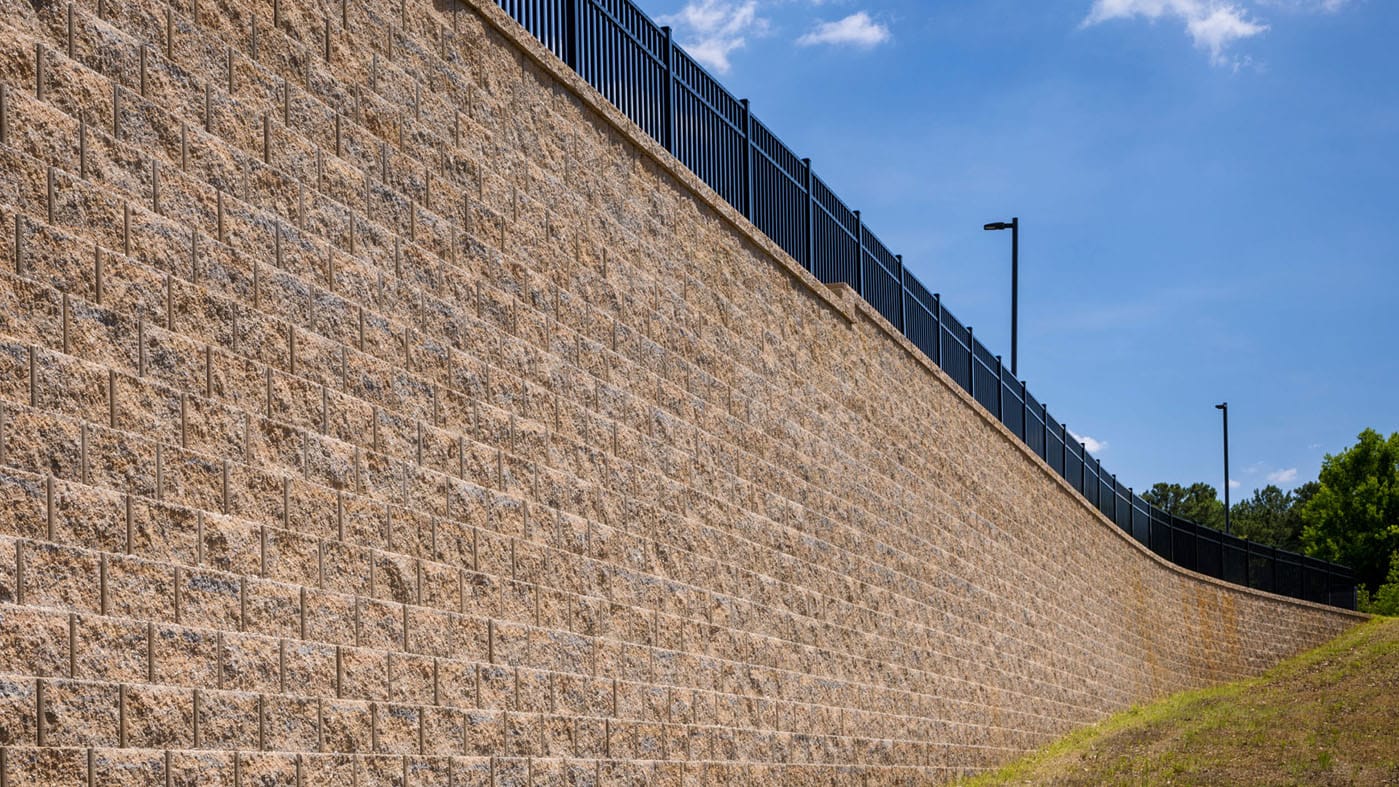
Segmental block retaining walls use large concrete units that lock together. They are ideal for parking lots, loading areas, and tiered landscaping. We often use them for shopping centers and office parks because they can be engineered to significant heights, work well with guardrails, and accept fencing or screen walls on top.
Poured concrete retaining walls are the go-to when the wall must be very strong in a tight footprint, such as basement areaways, dock pits, or where equipment drives close to the edge. These walls are reinforced with steel rebar and poured into forms, which lets us create curved or stepped shapes and integrate features like stairways or planters.
Concrete masonry unit (CMU) retaining walls are useful for shorter walls or where the wall will be faced with brick, stone, or stucco to match an existing building. We often use CMU with a brick or stone veneer to tie new work into older Baltimore structures so the upgrade looks intentional, not patched in.
In some cases we combine systems, such as a lower segmental wall with an upper cast-in-place concrete barrier or railing, to meet code requirements and project aesthetics.
How We Design and Engineer Your Retaining Wall
A reliable commercial retaining wall starts with engineering, not just stacking blocks. On most projects above 3 to 4 feet, Superior Masonry Baltimore works from stamped engineering drawings that address soil conditions, surcharge loads, and drainage requirements.
We begin by collecting site information: survey data, utility locations, and any geotechnical reports that exist for the property. If the wall will support parking or a drive lane, the engineer calculates the surcharge from vehicles, including delivery trucks or emergency vehicles, not just car traffic.
The design phase includes specifying geogrid reinforcement, footing dimensions, rebar layout, and drainage components such as perforated pipe and clean stone backfill. For tall or heavily loaded retaining walls, we might also incorporate deadman anchors or tiebacks into stable soil behind the wall.
Local codes and permitting are part of this process. In Baltimore and surrounding jurisdictions, walls above certain heights or near property lines often require permits and inspections. We coordinate with the engineer and local authorities so the wall design meets current standards, not outdated rules or assumptions from previous work at the site.
Construction Process and What to Expect on Site
Once design is approved, Superior Masonry Baltimore sequences work to minimize disruption. We typically begin by setting up fencing and signage to keep pedestrians and vehicles out of the work area. If the wall is replacing a failed structure, we may shore the slope temporarily so nearby pavements or structures stay safe during demolition.
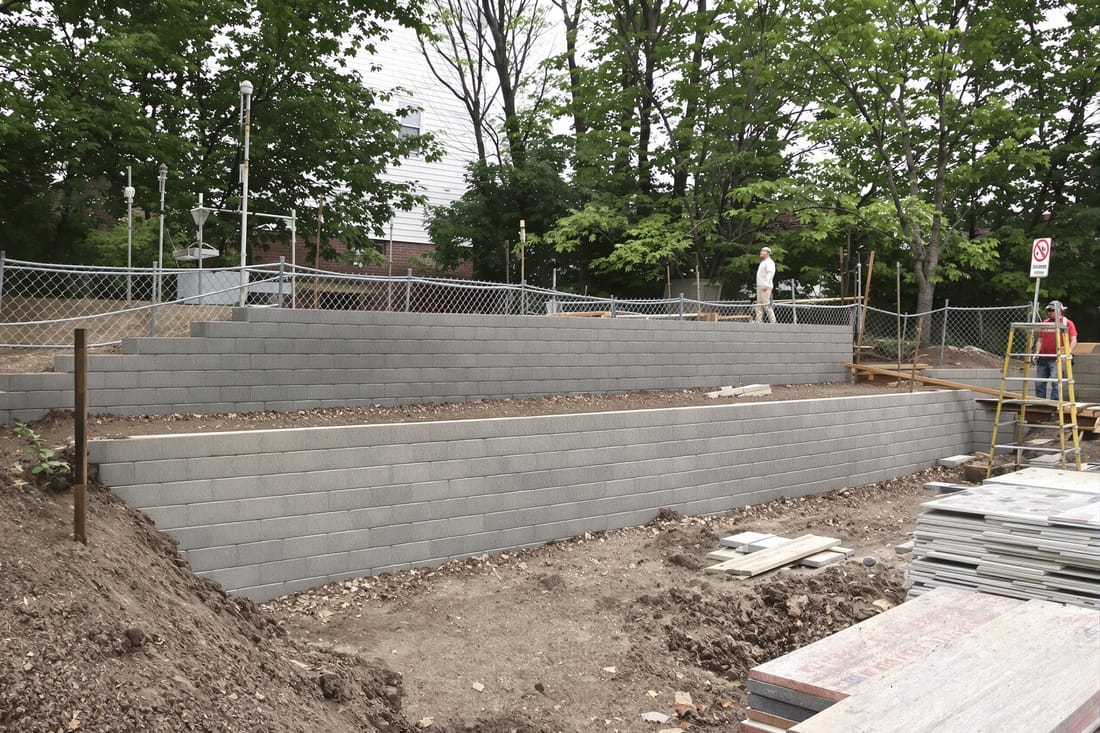
Excavation is the first major step. We over-excavate below the base of the wall, usually well below the local frost line, and remove unsuitable soils, roots, or debris. The base is then rebuilt with compacted, crushed stone to create a stable, level foundation. Any shortcuts at this stage almost always show up later as bulging or settlement.
Next, we install drainage. This usually includes perforated pipe at the base of the wall, wrapped in fabric and surrounded by clean stone, plus vertical drainage aggregate behind the wall face. In Baltimore’s climate, trapped water behind a wall is one of the most common reasons for cracking and movement, especially when it freezes in winter.
The wall units or forms are then set in place, with continual checks on line, level, and batter (the slight lean into the soil). For reinforced walls, geogrid or rebar is installed per the engineer’s layout. We backfill in layers, compacting each lift with the appropriate equipment so the soil does not settle under future traffic.
Before we leave, we restore disturbed pavements and landscaping, remove debris, and walk the wall with you to review drain outlets, joints, and any features such as stairs, guardrails, or fencing.
Cost Factors for Commercial Masonry Retaining Walls in Baltimore
Commercial retaining wall pricing varies widely, and understanding the drivers helps you plan accurately. Superior Masonry Baltimore prepares detailed proposals that show what is included so you are not surprised mid-project.
Height and length are obvious factors, but the loads behind and above the wall are just as important. A 5-foot wall supporting a heavily used parking lot with truck traffic can cost more per foot than a taller wall holding back a lightly loaded landscaped slope.
Access is another major cost driver. In tight city alleys, interior courtyards, or steep slopes, we may need smaller equipment, handwork, and staged material delivery, which increases labor hours. Sites with easy access for excavators and delivery trucks are more economical to build.
Soil conditions and drainage requirements also affect price. If we encounter soft or organic soils, buried debris, or undocumented utilities, additional excavation, undercutting, and base reconstruction may be required. For walls built near buildings or existing utilities, extra care and sometimes hand excavation slow the pace but protect your assets.
Finally, finishes and coordination add cost but can be worthwhile. Brick or stone veneer, architectural block, integrated lighting, or custom railings can help the wall blend into a high-visibility retail or office environment. For occupied properties, scheduling around business hours and providing temporary protections can add some cost but help you avoid lost revenue or tenant complaints.
Common Problems We Fix and How to Avoid Future Failures
Many calls to Superior Masonry Baltimore involve existing commercial retaining walls that are leaning, cracked, or spilling soil and paving. Most of these issues trace back to poor drainage, underdesigned walls for the actual loads, or shortcuts in construction.
Signs of trouble include bulging in the middle of the wall, open joints, water stains or efflorescence, vertical cracking near corners, pavement settlement along the top of the wall, and clogged or missing drain outlets. If your wall is near parking or a pedestrian route, these are not just cosmetic problems. They can turn into trip hazards or, in severe cases, partial collapses.
When we assess a failing wall, we look behind the visible damage. We check for weep holes or drain pipes, examine how water flows across nearby pavements, and inspect the type and condition of backfill. Sometimes repairs such as improved drainage and localized reconstruction are enough to extend the wall’s life. In other cases, full replacement with a properly engineered system is the safer long-term solution.
To prevent repeat failures, we design with Baltimore’s rainfall patterns and freeze-thaw cycles in mind, include realistic assumptions about future loading, and recommend maintenance steps. These may include keeping drain outlets clear, not stacking materials too close to the wall edge, and checking for early signs of movement after major storms or utility work nearby.
By partnering with a local contractor that understands our region’s soils, weather, and building patterns, you greatly reduce the chance of unexpected wall problems that disrupt your business or tenants.