Home › Site Walls and Hardscapes
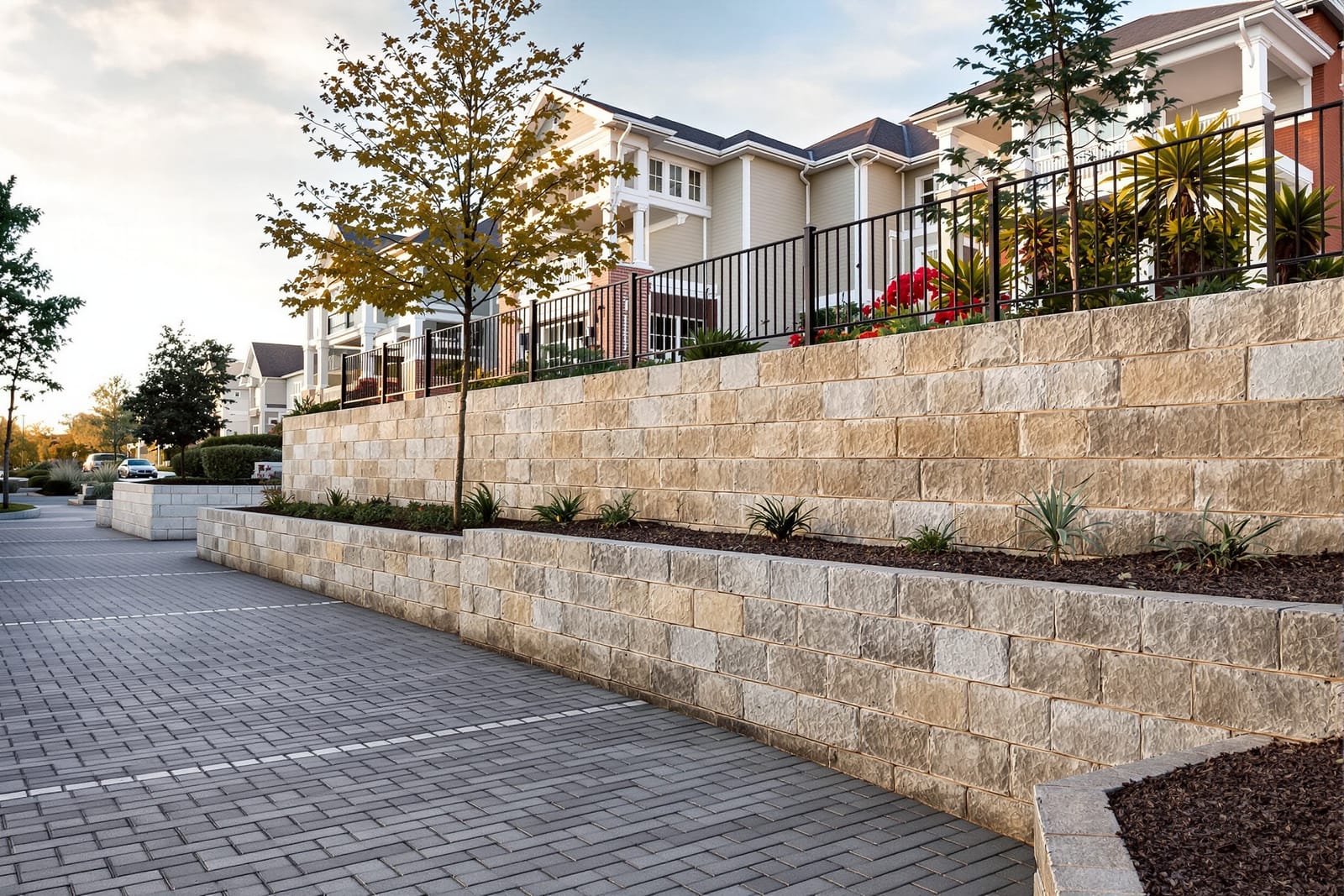
We build commercial hardscape masonry in Baltimore, MD such as site walls, planters, steps, and plazas. Our team creates durable pedestrian friendly spaces around offices, schools, and retail properties. Combine function and aesthetics with thoughtfully detailed masonry features.
Superior Masonry Baltimore provides professional commercial hardscape masonry throughout Baltimore, MD, Maryland and the surrounding area. Our licensed, insured crew delivers safe, clean, on-time work with a free estimate before anything begins. Call (410) 849-6723 or request your free quote.
Commercial Site Walls & Hardscapes in Baltimore, MD
Superior Masonry Baltimore designs and builds commercial hardscape masonry that actually fits how people use your property day to day. Our team focuses on site walls and hardscapes for apartment communities, schools, small retail centers, churches, offices, and municipal spaces throughout Baltimore and the surrounding Maryland counties.
When you call us, you are not getting a one-size-fits-all layout. A Fells Point restaurant patio needs different circulation and durability than a Dundalk self storage facility or a Parkville medical office. We look at traffic patterns, snow plow routes, delivery truck access, and where standing water typically collects before we ever talk about stone choices.
Our crews are local masons who work in Baltimore’s clay-heavy and often poorly drained soils all year. We build site walls and hardscapes that handle freeze-thaw cycles, salt from winter de-icing, and the kind of heavy foot traffic you get around city sidewalks and school entrances. The result is commercial hardscape masonry that looks good, drains correctly, and is realistic to maintain on a commercial schedule.
Planning & Design: How We Approach a Commercial Hardscape
A successful site wall or hardscape project starts with a walk of your property. We map out grades, downspouts, mature trees and root zones, existing utilities, and traffic flow. For example, on a Highlandtown mixed-use building, we often must keep egress paths clear while still creating usable outdoor gathering space.
We then talk about how the area should function. Are you trying to create seating for tenants, manage a slope to stop soil washing onto sidewalks, or define loading areas so delivery trucks stop hitting curbs? A retaining wall behind a warehouse will have different priorities than a courtyard at a senior living facility.
Based on that, we sketch basic layouts right on site flags or spray paint for you to react to. From there we move to scaled drawings that show wall locations, steps, ramps, landings, and drainage routes. Where required, we coordinate with engineers for tall retaining walls or walls within certain distances of property lines or structures. In Baltimore City, certain wall heights and locations trigger permit and engineering requirements, and our team is familiar with those thresholds so you are not surprised later.
Materials & System Options for Site Walls and Hardscapes
Commercial hardscape masonry is not just about picking a color. Each system has strengths and limitations that matter for long term performance.
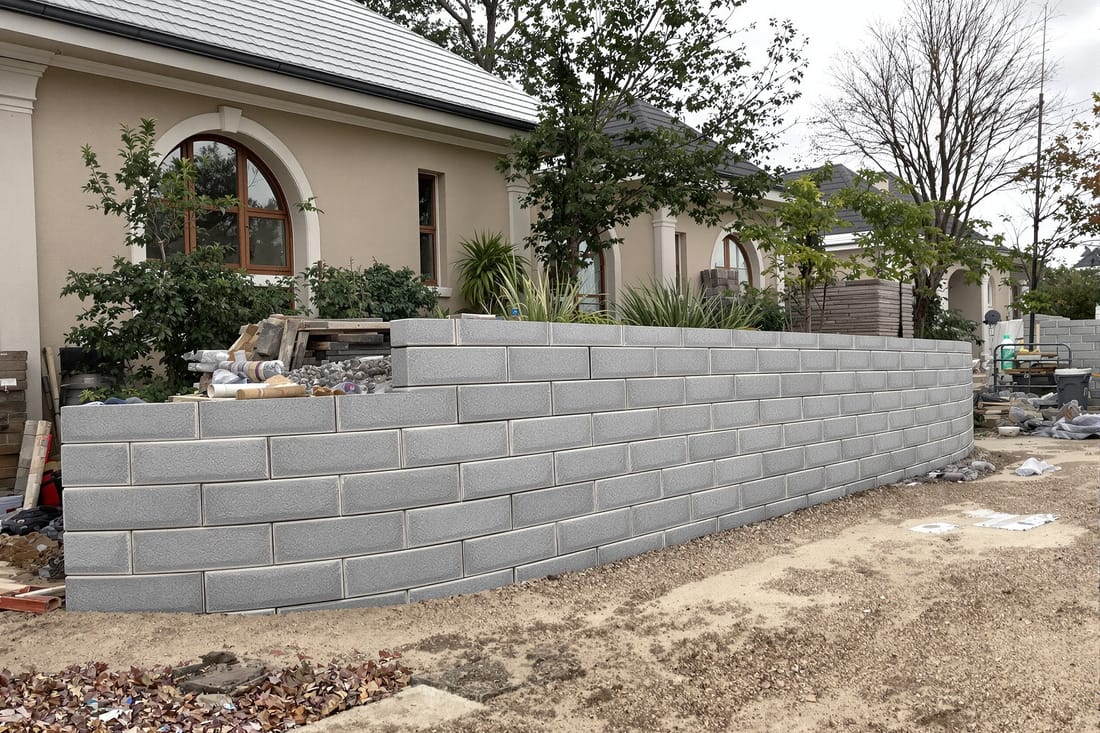
For retaining and site walls, we commonly use: (1) segmental concrete block systems (SRWs) for taller walls and engineered applications. These are interlocking units with geogrid reinforcement and gravel backfill to handle heavy loads and poor soils. (2) Cast-in-place concrete walls when space is tight or loads are high near property lines and structures. (3) Brick or stone veneer over a concrete wall for projects where appearance must match a historic building or existing façade, common in neighborhoods like Mount Vernon or Federal Hill.
For hardscape surfaces, choices include: (1) concrete pavers for plazas, walkways, and courtyards, with joint patterns and edge restraints designed for heavy foot traffic. (2) Poured concrete with control joints and reinforcement, often used for service areas and dumpster pads that see cart or truck traffic. (3) Natural stone such as bluestone or flagstone for high visibility areas where architecture or branding calls for a more distinctive look.
We will go over slip resistance, salt tolerance, color fade, and maintenance for each option. For example, darker pavers can hide stains in restaurant delivery zones, while lighter surfaces may be better in sun-exposed courtyards where heat build-up is a concern.
How Site Walls Are Actually Built (Step by Step)
Building a commercial site wall correctly in Baltimore starts with excavation and subgrade preparation. We dig to the design depth, then proof roll and compact the subsoil. In many city lots we encounter fill, brick rubble, or soft pockets. These must be undercut and replaced with compacted stone or the wall will settle or lean.
We then install a compacted crushed stone base at the specified thickness, which might be 6 to 12 inches for a standard SRW wall, thicker for taller walls or poor soil. For segmental block walls, the first course is set perfectly level on this base, since any error here will carry up the wall. We check alignment and level on every block of the base course.
Behind the wall, we place clean, free draining stone and a perforated drain pipe that leads to daylight or a drain structure. A non woven geotextile fabric separates the drain stone from surrounding soils to prevent clogging. Where engineering calls for it, we install geogrid layers that extend back into the soil, tying the retained soil mass into the wall system.
For cast in place concrete walls, we set forms, place reinforcing steel according to the engineer’s design, then pour concrete in lifts, vibrating it to eliminate voids. After curing, we install any required waterproofing, drainage board, and backfill in compacted lifts. Taking shortcuts on these details is what leads to bulging walls, water stains, and frost damage a few winters later.
Hardscape Construction: Base, Drainage, and Details
For plazas, walks, and outdoor seating areas, the unseen layers matter more than the surface. Superior Masonry Baltimore excavates to the required depth, then installs compacted aggregate in layers. For most commercial hardscape masonry work, that means at least 6 to 8 inches of compacted stone beneath pavers or 4 to 6 inches beneath a concrete slab, adjusted for soil conditions and loads.
We shape the base to create proper pitch. In Baltimore’s climate, we typically aim for a 1 to 2 percent slope away from buildings so water does not sit against foundations or door thresholds. Around ADA ramps and entrances, we coordinate slopes carefully with code requirements while still getting water to drains or daylight.
Concrete pavers are set over a leveling layer of bedding sand or stone dust, then compacted into place with edge restraints that keep the field locked together. Joints are filled with sand or a polymeric product, depending on site conditions and maintenance expectations. For poured concrete, we place reinforcement, pour, float, and finish the slab, then cut control joints at calculated intervals to control cracking.
We pay attention to trip edges where hardscape meets surrounding grade, especially near parking lots and high traffic pedestrian routes. Small details like lowering a paver field slightly at building thresholds or reinforcing corners where dumpsters turn can prevent long term damage and liability issues.
What Drives Cost & How We Control It
The biggest cost drivers for site walls and hardscapes are access, soil conditions, wall height, and drainage requirements. A straightforward retaining wall along a wide, open edge of a Towson commercial lot will be far less costly than a similar height wall squeezed down a narrow alley in Canton with no equipment access.
Soil conditions matter. If we find saturated clay, buried debris, or old foundations, we may need additional excavation, stone base, or engineering. We communicate these possibilities up front so you can budget realistically. On some Baltimore properties that have been redeveloped multiple times, we recommend a limited test excavation before finalizing numbers for large retaining walls.
Material selection also affects cost, but sometimes spending a bit more on the right system saves money in the long run. For instance, using a heavier duty paver in a delivery area can prevent rutting and replacement after only a few winters. Similarly, adding drainage stone and pipe behind a wall is a relatively small cost that greatly reduces the risk of movement and repairs.
Superior Masonry Baltimore looks for ways to phase work around your operations. For active properties, we may stage hardscape installation so entrances remain open, or schedule heavy equipment work early in the day to avoid conflicts with school drop-off or retail peak hours. Good phasing can prevent lost revenue and frustration, which is a real cost on any commercial project.
Common Baltimore Issues & How We Maintain Your Investment
In our region, freeze-thaw cycles, de-icing salts, and heavy use are the main reasons commercial hardscapes fail early. We design and build with these realities in mind. For example, we avoid relying on surface sealers as the only line of defense. Instead, we select materials and joint details that can tolerate salt and moisture, especially near sidewalks and parking lots that will be treated all winter.
Another frequent issue is settlement near trenches where utilities were installed or repaired. On older Baltimore properties, unknown or shallow utilities are common. When we see suspect areas near new hardscapes, we either bridge them with thicker base or coordinate with utility work before building over them, so your new sidewalk or patio does not sink in a year or two.
After construction, we can provide a maintenance plan that is realistic for commercial property managers. This might include periodic joint sand top offs for paver systems, cleaning schedules for stains in restaurant or loading areas, and inspection of wall drainage outlets to make sure they stay clear. We walk you through what to look for so minor issues like a small crack, a blocked drain outlet, or a loose cap unit are addressed before they become larger structural problems.
Because Superior Masonry Baltimore works almost exclusively in this region, we often get called back years later to add to or tie into existing work. We build with that in mind, so future expansions or repairs can be made without tearing out more than necessary.