Home › Tuckpointing and Repointing
Our tuckpointing specialists in Baltimore, MD restore crumbling mortar joints in brick walls and chimneys. We carefully grind out loose mortar and match new joints for a seamless repair. Improve structural integrity, stop water intrusion, and refresh the look of your masonry with precise repointing.
Superior Masonry Baltimore provides professional tuckpointing throughout Baltimore, MD, Maryland and the surrounding area. Our licensed, insured crew delivers safe, clean, on-time work with a free estimate before anything begins. Call (410) 849-6723 or request your free quote.
Tuckpointing and Repointing for Baltimore Brickwork
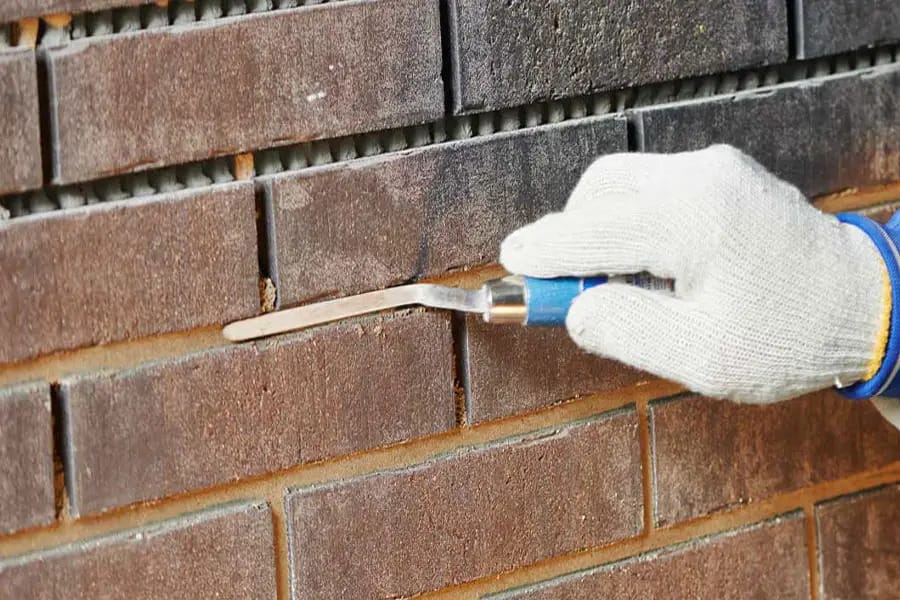
Tuckpointing is the process of removing failed mortar joints and packing in new mortar so your brick or stone walls stay solid, dry, and safe. In Baltimore, with our freeze-thaw winters, humid summers, and older housing stock, mortar joints often fail long before the brick does. Superior Masonry Baltimore focuses on restoring those joints so you do not have to rebuild entire walls later.
Homeowners and property managers usually call us when they see mortar turning sandy, cracking, or falling out, or when bricks start shifting and hairline cracks appear around windows, doors, and chimneys. On rowhomes and historic buildings, you may also see water stains on interior plaster, peeling paint along party walls, or efflorescence (white salt deposits) on the brick. All of these are signs your mortar joints are no longer doing their job.
Superior Masonry Baltimore specializes in both tuckpointing and repointing. In normal conversation, people often use the word tuckpointing for any mortar joint repair. Technically, repointing means removing loose mortar and installing new mortar that matches the existing color and profile. Tuckpointing is a more detailed process that uses a second contrasting color to create crisp, fine lines and a finished look. For Baltimore clients, we recommend the right approach based on your building age, budget, and whether curb appeal or strict historic accuracy matters more.
Step by Step: How Superior Masonry Baltimore Performs Tuckpointing
A proper tuckpointing job is not just smearing some cement in the joints. Done correctly, it is a controlled, staged process designed to protect your brick, not damage it.
First, we inspect all elevations of the structure, including chimneys and rear and side walls that many owners rarely see. We look for hollow joints, loose bricks, spalling (brick faces popping off), previous hard cement patches, and areas where water is entering. In Baltimore, parapet walls and top-floor rear walls are often the worst areas due to constant exposure.
Second, we set up access using ladders, roof brackets, or scaffolding, then prep the work area by protecting windows, trim, roofing, and adjacent surfaces with plastic, plywood, and drop cloths. We also turn off and protect any nearby exterior outlets and HVAC components.
Third, we remove the failing mortar. On historic or softer brick, we typically use hand tools or small grinders with vacuum shrouds, and we cut to a depth of roughly 2 to 2.5 times the joint width. This gives the new mortar enough bite. We never overcut into the brick, which is a common shortcut that leads to broken edges and future spalling.
Fourth, we clean the joints with compressed air or brushing to remove dust and debris, then we lightly dampen the brick. Pre-wetting ensures the masonry does not suck moisture too quickly from the fresh mortar, which reduces cracking and improves bond strength.
Fifth, we pack in new mortar in lifts, compacting each layer firmly so there are no hidden voids. For tuckpointing, after the main joint is properly filled and tooled, we apply a thin, contrasting color ribbon to create sharp, straight lines. For standard repointing, we simply match your existing profile, such as concave, flush, or weather-struck joints.
Finally, we tool and brush the joints for a consistent finish, remove protections, and rinse down the walls as needed. When we are working on occupied homes or active storefronts, Superior Masonry Baltimore stages the work so entrances stay usable and sidewalks remain safe.
Matching Mortar for Baltimore Rowhomes and Historic Properties
Mortar choice matters more than most people realize, especially on older Baltimore brick. Many rowhomes in neighborhoods like Fells Point, Federal Hill, Canton, and Bolton Hill were built with softer, lime-rich mortar. If these walls are repointed with modern high-cement mortar that is too hard, the brick often becomes the weak point. Over time, the brick faces crack and flake while the mortar stays rigid.
At Superior Masonry Baltimore, we start by identifying the age and type of your masonry. For pre-war or historic structures, we typically use lime-based or lime-modified mortars that are slightly softer and more flexible than the brick, so the joint, not the brick, handles movement and weather stress. For newer masonry, such as 1980s and later construction, standard Type N or S mortars may be appropriate, depending on exposure and structural load.
We also pay attention to color and sand texture. Many Baltimore blocks have patchwork from past repairs that do not match. When we tuckpoint, we custom blend pigments and select sand with the right grain size to get as close as possible to your existing joints. This is especially important if you are only repairing one wall or one section of a facade and want it to blend in.
For visible front facades, chimneys that face the street, or commercial storefronts, we can provide a small test area so you can see how the mortar looks once partially cured. Mortar lightens as it dries, so judging color from a wet mix is a mistake. Our process reduces the chance of ending up with joints that look obviously newer or mismatched from the rest of your building.
Common Problems We See in Baltimore and How We Handle Them
Baltimore properties have some recurring tuckpointing issues due to age, weather, and typical building details. Knowing these ahead of time helps you understand what a proper repair plan should include.
Chimneys are frequent trouble spots. We commonly find missing mortar on the upper courses, cracked crowns, and loose brick around flue liners. With chimneys, Superior Masonry Baltimore often combines tuckpointing with crown repair, new wash caps, or new concrete crowns and, if needed, installing or replacing metal flashing where the chimney meets the roof. This helps prevent leaks that show up as ceiling stains or rusted furnace pipes.
Parapet walls and party walls are another major concern. On many Baltimore rowhomes, these walls sit above the roof and take full wind and rain. We often see heavily eroded joints and, in some cases, bricks that have shifted or tilted outward. In those situations we may recommend both tuckpointing and limited brick rebuilding, plus new coping or flashing to keep water out of the wall.
We also see many past repairs done with the wrong materials, such as hard Portland cement slapped over soft brick, or joints skimmed only at the surface. When we encounter this, we remove incompatible or loose material back to sound mortar, then rebuild the joint correctly to full depth. If brick faces have already spalled, we discuss options like brick replacement with close matches or carefully turning bricks so damaged faces are less visible while maintaining strength.
Interior signs such as damp basements and peeling paint near exterior walls often trace back to failing exterior joints. In those cases, our tuckpointing is usually paired with addressing grade and drainage issues, such as re-sloping soil or repairing downspouts, to keep water from constantly pressing against the masonry.
What Affects Cost and Timeline for Tuckpointing in Baltimore
Tuckpointing prices can vary widely, and understanding why helps you compare estimates fairly. Superior Masonry Baltimore bases pricing on several clear factors.
Access is a major driver. A simple one-story rear wall over a flat yard is far quicker and cheaper than a four-story front facade over a busy sidewalk that requires full scaffolding, sidewalk protection, and possibly permits. Chimney work that requires roof access, harness tie-offs, or special rigging will also cost more than easy ground-level sections.
The depth of deterioration matters. If the existing mortar is only weathered at the surface, we can usually cut to the proper depth and refill without major brick replacement. If joints are completely missing, bricks are loose, or entire sections have bulged, then costs increase because we need to dismantle and rebuild courses, install temporary support, and sometimes integrate new flashing or caps.
Material selection affects cost too. Historic lime-based mortars and custom color matching require more skill and time than basic gray mortar. Decorative tuckpointing with fine contrasting lines is more labor intensive than standard repointing, since it involves extra detailing and careful layout.
Timeline depends on square footage, access, and required curing conditions. As a rough idea, a typical front and rear wall of a Baltimore rowhome might take several days to a week, assuming normal weather and no major rebuilds. We schedule around rain and extreme heat or cold, since fresh mortar should not be exposed to driving rain or rapid freeze. When needed, we use temporary covers or work in smaller sections so your property stays secure during the process.
How to Choose a Tuckpointing Contractor in Baltimore
Before you hire anyone for tuckpointing, it is worth knowing what to ask and what red flags to avoid. Superior Masonry Baltimore encourages customers to be thorough, whether you choose us or someone else.
Ask how the contractor will remove old mortar and how deep they plan to cut. If the answer is simply, "We just skim over what is there," that is a warning sign. Joints must be cut back to sound mortar, typically at least 3/8 to 1/2 inch, often more, to ensure a lasting repair.
Request details about mortar type and how they will match color and hardness to your existing masonry. On older Baltimore homes, you want someone who understands lime mortars and why overly hard mixes can damage brick. If the contractor always uses the same bagged mortar regardless of the building, that can be a problem.
Verify how they will protect windows, siding, roofing, and neighbors. Tuckpointing creates dust and small debris. Responsible crews use dust collection where possible, cover sensitive areas, and keep work sites tidy, especially on tight Baltimore blocks where properties are close together.
Finally, look for photos of past projects on buildings similar to yours and ask for local references. A contractor with real Baltimore experience will recognize typical conditions like shared party walls, narrow alleys, and aging brick blends. Superior Masonry Baltimore is always willing to walk you through what we see on your property, explain your options in plain language, and give you a clear written scope of work so you understand exactly what your tuckpointing project includes.